How Modern Teaching Methods Improve Student Learning Outcomes
Apr 28, 2026
Modern teaching methods do not look like what most adults remember from their own school years, and that is precisely the point.
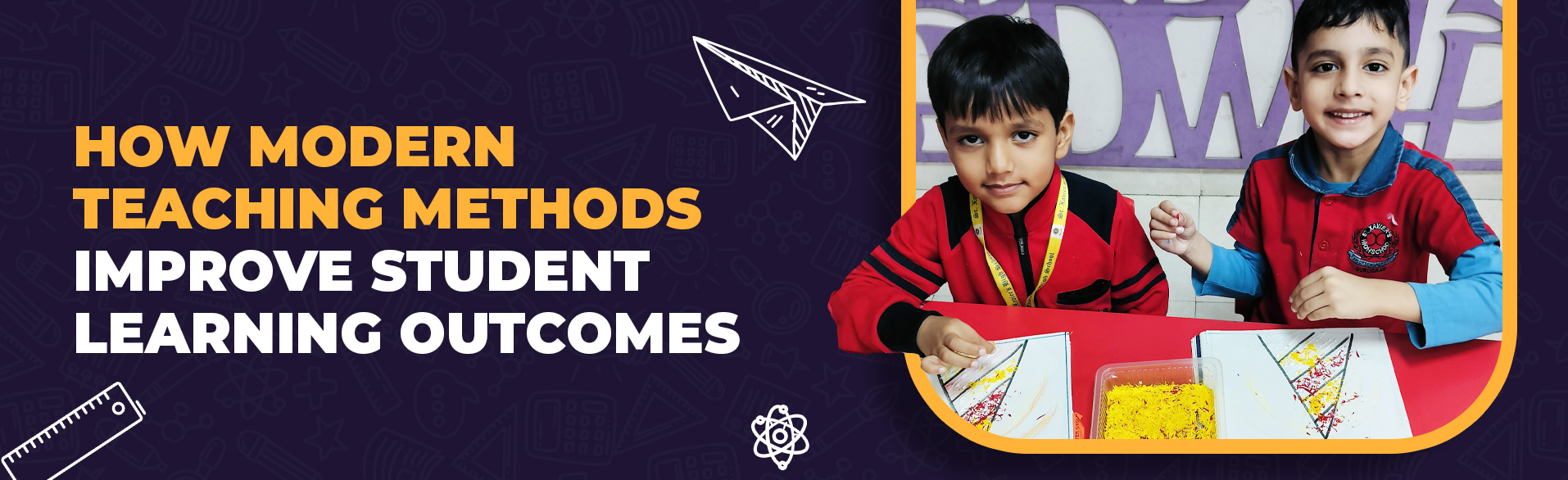
Modern teaching methods do not look like what most adults remember from their own school years, and that is precisely the point. A Grade II student in Sector 81 spent three weeks last term building a working weather model through collaborative peer activities rather than just copying a diagram from a board.
She didn't just memorize the types of weather. She figured them out, made wrong assumptions, discussed it with her small group, and revised her thinking before the model worked. Her understanding at the end of the term was completely natural. That is what genuine learning looks like in the early years. And it doesn't happen by accident.
Understanding Modern Teaching Methods in Education Today
Modern teaching methods in education aren't a collection of digital screens bolted onto a traditional classroom. They represent a fundamental shift in where the cognitive effort sits during a lesson. In a traditional model, the teacher works hardest. In a modern one, the student is actively engaged.
The research on this is consistent. When primary students actively construct understanding rather than passively receive it, their foundational retention is significantly higher than what lecture-based delivery produces at the same age.
What this shift actually looks like inside an early years classroom:
- Inquiry-based learning where students investigate a concept rather than answer a predetermined question with a single correct response.
- Project-driven activities using tangible materials, building the reasoning flexibility that early childhood development demands.
- Hands-on discovery where concept introduction happens through play and observation, making lesson time about application rather than passive listening.
- Gentle, formative observation built into daily classroom activity rather than reserved exclusively for stressful formal tests.
- Cross-subject integration where a single activity develops basic counting, vocabulary, and social competency within the same sustained task.
What Changes in an Early Years Cohort
When a primary cohort shifts from a traditional delivery model to an inquiry-based learning framework, something specific shifts that basic report cards alone cannot capture. Teacher-directed questions drop. Student-initiated questions begin to double within the same classroom time.
Peer interaction becomes a daily observable pattern. Young students naturally explain concepts to each other, without teacher mediation, in the middle of working sessions. That specific behavior does not emerge in rigid traditional environments because students in those environments have no expectation of being asked to share their understanding.
The end-of-year confidence reflects the shift. When asked to solve an unfamiliar puzzle or navigate a new group task, students in a modern framework attempt it without immediately seeking adult rescue. That is not a knowledge gap but a confidence gap. And an inquiry-based learning framework closes it effectively.
The Real Benefits of Modern Teaching Methods in Child Development
The benefits of modern teaching methods extend well beyond basic literacy and numeracy. Understanding that distinction changes how parents evaluate what a school is genuinely building in their child across their foundational years.
A student who spends their early years inside a modern learning environment arrives at Grade III with something drill-based instruction rarely develops. The ability to work with others, manage small frustrations, and explain their thinking without relying entirely on adult prompts.
Those capabilities determine how a student performs in every learning environment that follows.
- Critical thinking develops through tasks structured around gentle problem-solving, which is how early childhood challenges are naturally organized.
- Communication confidence builds through regular group discussion and the weekly experience of sharing their thoughts with classmates.
- Self-directed learning habits form when young students are given genuine choices within an activity rather than strict step-by-step instructions that eliminate all thinking.
- Emotional resilience strengthens through structured group work that requires taking turns, sharing materials, and shared accountability for an outcome.
- Academic curiosity sustains itself when lessons connect to their immediate world rather than abstract concepts.
What Genuine Modern Teaching Looks Like Inside a School
A school that delivers modern teaching consistently doesn't just mention collaborative learning in a brochure. It builds the environment around it. Classroom furniture faces inward for discussion rather than forward for passive reception.
Ask any teacher at a campus visit what happened in their classroom yesterday. A teacher working inside a genuine modern learning framework will describe what the children were building, investigating, or discovering together. A teacher in a strict traditional model will describe what they themselves were saying.
That single answer tells a parent more about a school's actual pedagogy than anything else. Because a school's teaching philosophy isn't in its documentation. It is in what the educators do on ordinary days.
Building Thinking Students for the Future
At St. Xavier's High School, Sector 81, modern teaching methods are fundamentally built into how our campus operates for the early years. Backed by the NASCA STEAM Learning approach, our curriculum builds independent, curious learners through inquiry and project-based learning. With a supportive student-teacher ratio, modern digital classrooms, and smart facilities, our educators are genuinely invested in every child's progress.
Book a campus visit and speak with our academic team directly. Come and see exactly what innovative, holistic learning looks like inside our classrooms on an ordinary day.